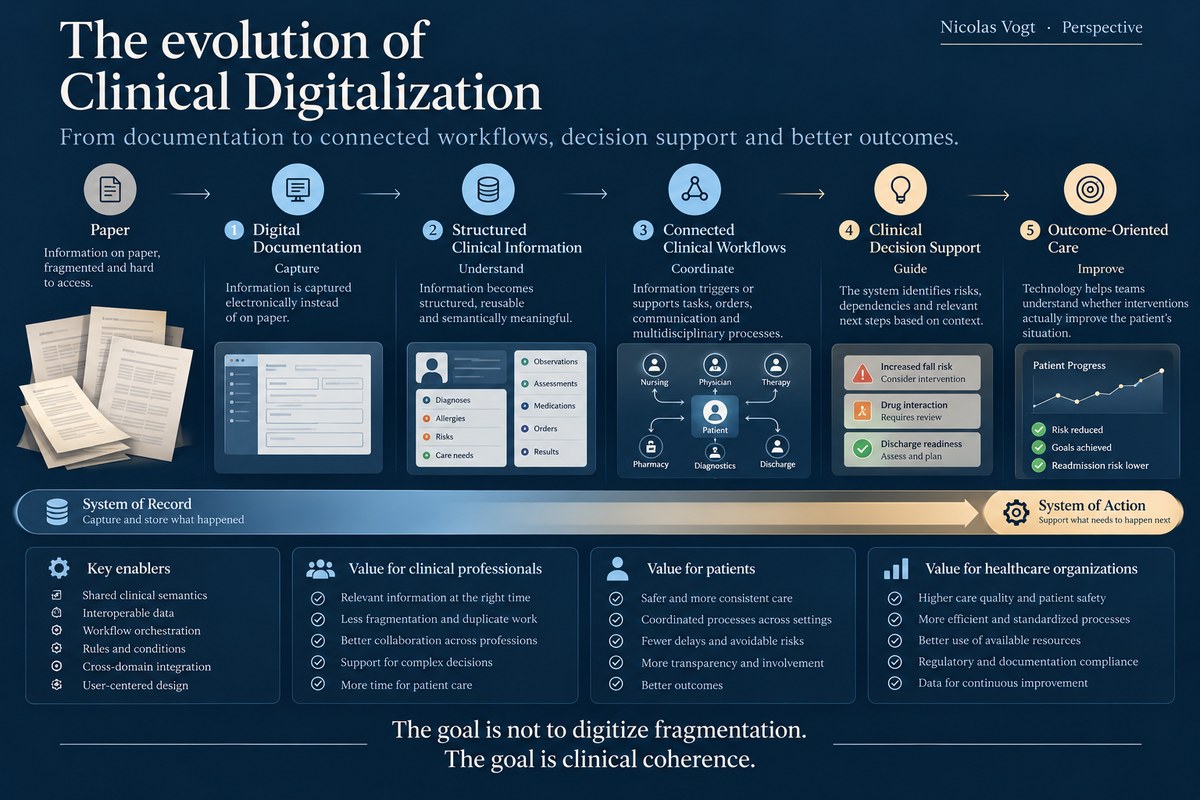
Healthcare digitalization is still too often described through documents, forms and individual software functions. That is understandable: documents are visible, requirements are tangible and screens can be demonstrated. But clinical work does not happen in documents. It happens in processes.
A patient moves through professions, departments and settings. Information is created, interpreted, changed and acted upon. If digitalization merely reproduces the existing fragments, we may end up with a technically digital process that remains clinically fragmented.
The unit of design should increasingly be the clinical process — not the individual form.
Start with the decision and the workflow
What does a nurse, physician or therapist need to know at this point in the process? Which information already exists? What decision follows? Who needs the result next? These questions lead to a different product design than asking which fields a digital form requires.
Information should work harder
Well-designed clinical information should not be captured repeatedly for isolated purposes. Where clinically and legally appropriate, it should support subsequent workflows, rules, coordination, reporting and decision support.
This is where interoperability becomes more than an interface topic. It is about preserving meaning as information moves through the patient journey.
Digital transformation is process transformation
Healthcare has good reasons for complexity. Regulation, professional responsibilities and patient safety cannot simply be designed away. But software can make that complexity easier to navigate.
For me, successful clinical digitalization therefore starts with understanding reality: what people actually do, why they do it and where information or coordination breaks down. Technology comes next.
These notes reflect how I think about Healthcare IT, Product Management and clinical digitalization. They are personal perspectives — intended to contribute to professional discussion, not to present universal answers.